
We Tried Google Ads for 30 Days… Here’s What Happened to Our Sales
Read Time:6 Minute, 42 Second
Google Ads service is one of those advertising channels that every internet marketer discusses. Some swear by it. Others say it torched their budget and gave them nothing to show for it. We kept hearing both sides, so rather than guess, we thought we’d do a proper test.
This article is not theory. It’s not a perfect case study. It’s a real 30-day experiment with Google Ads, rack full of real decisions, mistakes and lessons. And if you’re considering running Google Ads or optimizing your search campaign, this kinda breakdown will give you a better grasp of what’s actually going on when our ads go live.
Why We Chose to Examine Google Ads for 30 Days
We were, like many businesses, hyperfocused on organic traffic and referrals for the longest time. Sales were rolling in, but growth felt sluggish and unpredictable. We wanted something that we could scale, measure and control.
Google Ads caught my eye as a demand-capturer rather than a demand-creator. People who are searching on Google are already looking for answers. And it was a simple question: could we position ourselves in front of those people at the right time and convert clicks to sales?
We selected 30 days because it represents a reasonable period in which to capture useful data and yet can be managed for risk. The goal wasn’t perfection. It was learning.
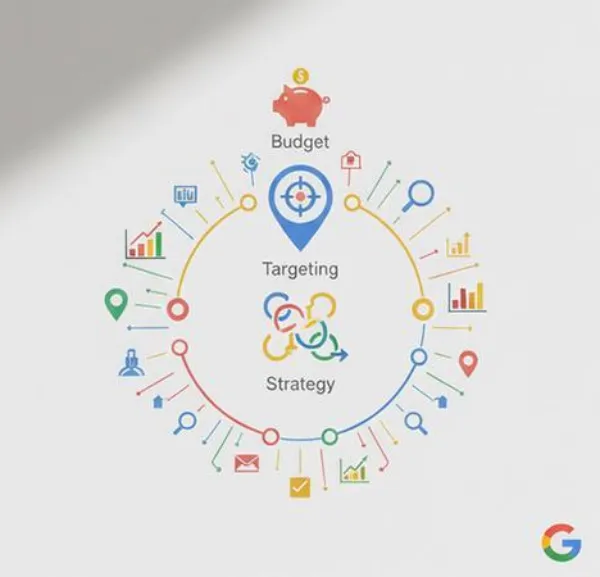
Our Google Ads Setup (Budget, Targeting & Strategy)
We began by making it simple. Instead of splitting the budget across various campaign types, we concentrated it on search ad campaigns only. The intent was obvious: Display advertising to people only when they were actively searching for keywords related to it.
Our budget was conservative. We wanted to have enough spending for data, but not so much that the cost of mistakes would be high. This meant that we had to be extremely targeted with keywords and very intentional with targeting.
We stayed away from general, broader keywords and targeted high-intent search queries. These were phrases indicating clear buying intent, not mere curiosity. The idea was to trade volume for quality.
Geographic targeting was narrow, limited to areas we could plausibly serve. We ran ads in business hours, wanting to ensure we could respond quickly.
Optimization of search campaigns began on the first day. Nothing was set and forgotten.
Expectation vs Reality
Before launching, expectations were mixed. On the one hand, we were looking forward to instant sales. On the other hand, we steeled ourselves for a long, slow process.
And we were surprised at how fast data was coming in. But clicks were not immediately converted into sales.
This was their first reality check. Google Ads can generate traffic fast, but sales depend on what happens after the click.
We thought ads would do the lion’s share. Instead, we learned ads are just the door. Everything else is what makes them do it or not.
The Effect of Google Ads on Our Sales (Real Numbers)
At the end of 30 days, it was obvious Google Ads had affected sales, but it hadn’t been a straight line.
A lot of the first week was about learning. Clicks rained in but the conversions were hit or miss. The second week was better, as we paused out the weak keywords and started to tune our ad copy. Results were constant by the third and fourth weeks.
Sales went up, but most importantly the quality of leads got better. The folks coming in from Google Ads were more purposeful. They asked better questions, acted more quickly and were easier to convert.
It was not just a boost in leads Google Ads provided. It brought clearer opportunities.
What Worked (And Why)
The major win here was getting people to focus on intent. Specific keywords that signaled a clear intention to buy faired much better than generic options. This resulted in less waste spend and better conversion rates.
Ad copy was also huge. Ads that spoke to a specific problem were more successful than those that tried easier-to-achieve awe-inspiring. Clarity beat creativity.
Another contributor to the success was continuous improvement. We daily tracked campaigns, not obsessively but purposefully. Cumulative marginal gains added up over time.
Landing page alignment seemed to matter more than they realized. When the copy in the ad lined up with the page itself, conversions increased almost instantly.
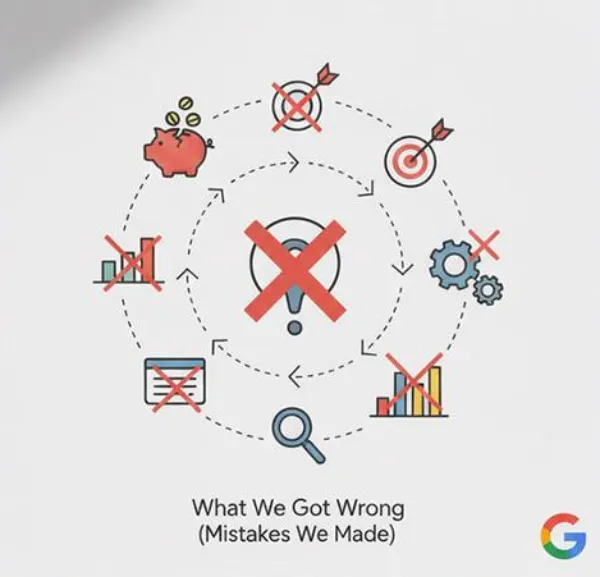
What We Got Wrong (Mistakes We Made)
Our first error was thinking Google Ads would be enough to sell. For a long time, we blamed keywords when the problem was messaging.
We also underestimated how long you need to optimize a search campaign. There were some promising early keywords that didn’t end up being the best converting in the long term. Others needed time to stabilize.
Another error was not excluding enough negative keywords at the start. The result was clicks to things that should have been filtered out up front.
None of those errors were fatal, but each slowed progress and cost money.
Is Google Ads Worth It After 30 Days?
The real answer is yes, but not for the reasons we initially believed.
Google Ads was not a magic switch that doubled sales overnight. What it did do was give you something to count on. We could track where the leads came from, how much they cost and what happened with them.
Just that clarity was worth the effort alone.
Within 30 days, we had a clear understanding of our audience, messaging, and funnel. Sales went up, but confidence went up more.
Google Ads was no longer a roll of the dice it became a system.
What This Test Showed Us About Google Ads
The one big lesson: Google Ads doesn’t like shortcuts. A platform does not fail because a campaign doesn’t work. They fail because the strategy is shallow.
Search campaign optimization is not a matter of chasing lower CPCs. It’s about aligning intent, message, and experience.
Another key lesson was patience. The first few days will seldom tell you anything about performance. Google Ads takes time to learn, and so do advertisers.
Another lesson: We learned that Google Ads is most effective when used as part of a broader system, not as an isolated tool.
Why A Lot of Businesses Give Up On Google Ads Too Soon
After this experience, we understood why many businesses throw in the towel too early. Early clicks feel expensive. Results feel uncertain. When you don’t have a plan, it is easy to become overwhelmed.
Most campaigns don’t fail. They get abandoned before optimization can kick in.
And companies that rely on Google Ads, test effectively and optimize deliberately often reap the rewards. Those who expect quick returns usually don’t.
Get Your Business Online with Goognetic
At Goognetic, we approach Google Ads with the same lens as this 30-day test no shortcuts, no guesswork. Just clear strategy, honest testing and ongoing improvement.
We place a large emphasis on search campaign optimization, because search intent drives real business results. From keyword selection to ad copy to landing page alignment, everything is built around conversion rather than clicks.
Whether you’re just getting started with your first Google Ads campaign or looking to fix one that’s underperforming, our approach minimizes wasted spend and increases clarity.
Google Ads works when strategy comes first and that’s what we help you build.
Final Thoughts
Experimenting with Google Ads for 30 days taught us more than any guide or tutorial ever could. It debunked bad assumptions, showcased real opportunities and revealed how effective search-driven advertising can be when done correctly.
Google Ads isn’t easy, but it is powerful. With the proper approach, patience, and optimization, it can become one of your most reliable growth channels.
If you’re thinking about Google Ads, don’t just launch and hope. Test with intention. Optimize with purpose. And most importantly, look beyond clicks to find what actually drives sales.

Happy
33 %

Sad
0 %

Excited
0 %

Sleepy
0 %

Angry
0 %

Surprise
67 %
 0
0
 2
2