
Pairing a Heat Pump and Generator With Solar Battery Storage in an All-Electric Home
Read Time:3 Minute, 20 Second
In 2024, U.S. electricity customers went without power for more hours than in any year of the prior decade, according to the U.S. Energy Information Administration — major-event interruptions alone averaged close to nine hours, up from roughly four hours annually over the previous ten years. For a household that has swapped its gas furnace for a heat pump and its range for induction, that figure isn’t trivia. It’s the night the heat goes out. Going fully electric runs straight into one stubborn question: what keeps the house warm when the grid quits?
The winter-evening load stack
A heat pump — a unit that moves existing warmth from outdoor air into the house rather than burning fuel to create it — is the efficiency anchor of electrification. The International Energy Agency puts a typical residential model’s coefficient of performance near four, meaning it delivers about four units of heat for every unit of electricity consumed, which makes current designs three to five times more efficient than a gas boiler. The IEA also notes that in 2024 heat pump sales outpaced gas boilers by the widest margin on record.
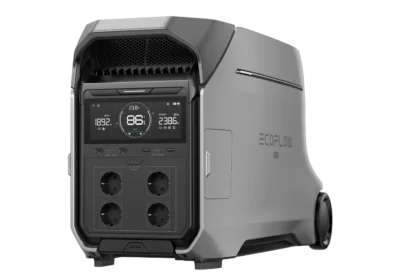
That efficiency shows up as a steady electrical draw on the coldest evenings — exactly when an EV may be charging and dinner is cooking on an induction top. Rooftop panels carry the daytime load easily, but demand peaks after sunset. Bridging that gap is the role of solar battery storage, a home battery that banks surplus midday generation and releases it on the evening ramp instead of pushing it back to the grid for little return.
Letting the battery run the show
In a well-designed setup, the battery is less a spare fuel tank than a traffic controller. A hybrid inverter sits between the panels, the pack, and the panel board, deciding moment to moment whether solar should charge the battery, run the heat pump, or both. Systems like the Sigen Energy Controller handle 3.8 to 11.5 kW with four MPPT inputs, enough headroom for the larger arrays an all-electric home tends to need.
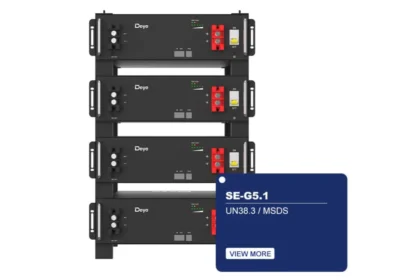
Capacity matters here, because heat is an energy-hungry load. Stacking LFP modules — lithium iron phosphate, a chemistry valued for its long cycle life and stable thermal behavior — lets a household size storage to its actual winter use rather than a fixed box. A modular battery-and-inverter platform such as SigenStor, which folds the inverter, battery pack, and energy management into one cabinet, can scale toward roughly 54 kWh per stack using 6.02 or 9.04 kWh BAT modules. An app like mySigen exposes the live energy flow, so a homeowner can see the heat pump drawing from sun, battery, or grid in real time.
The deep backstop: generator and EV
A battery covers most evening gaps, but a multi-day cold snap or a storm outage calls for a deeper reserve. This is where a generator earns its place — and where coordination is everything. A backup controller such as Sigen LoadHub manages the transition with near-instant switchover (rated at 0 ms) and can prioritize circuits, so the heat pump and refrigerator stay live while non-essential loads wait. That same hub can fold a generator in as a charging source when solar is buried under snow.
Increasingly, the generator’s job is shared by the car in the driveway. Vehicle-to-home, or V2H, lets a bidirectional charger pull energy from an EV battery back into the house; bidirectional DC hardware rated around 25 kW can turn a parked EV into a rolling reserve that dwarfs most portable generators in capacity. Reliability metrics like SAIDI, the outage-duration index standardized by the IEEE, suggest grid interruptions aren’t getting shorter — making layered backup a reasonable hedge rather than overkill.
For anyone mapping out how these pieces fit before buying, working through the system architecture behind an integrated stack is a sensible first step toward a home that heats, charges, and rides out an outage on its own.

Happy
0 %

Sad
0 %

Excited
0 %

Sleepy
0 %

Angry
0 %

Surprise
0 %
 0
0
 0
0