
Cloud Accounting Improves Remote Team Work and That’s Why
Read Time:6 Minute, 17 Second
Pandemic might be long over, but it still has a huge impact on jobs around the world. One of the most obvious consequences of COVID-19 is the spread of teams working remotely. It has been somewhat common in the IT department even before 2020. However, nowadays a lot of businesses move online with employees working from their homes and offices in different cities and countries.
That’s why services operating on a cloud basis became so ubiquitous. We’ve seen the rise of task management apps and video-call software like Zoom. Now, more and more cloud-based accounting software appears. To name a few, there are Site.pro, QuickBooks, and Xero. Each has a fair share of unique features. Site.pro, for example, is a free invoicing software designed for small and medium businesses. It provides fast automatic invoice recognition, freedom of import, legal forms and, basically, all the tools needed for financial management.
Cloud accounting in general made business management more flexible and convenient, but it also significantly improved teamwork and communication. For remote and hybrid working teams, cloud accounting becomes an important part of their work environment, and for a good reason.
In this article, we’ll explore how cloud accounting software can solve virtual workplace issues you might have not even thought of.
What is Cloud Accounting
There is a clear distinction between cloud and on-premises accounting software.
- Cloud accounting software is available through a browser or a mobile app. A user doesn’t need to install the program itself on their device.
- On-premises software is, on the contrary, installed directly on a device, usually a high-power computer.
Unlike on-premises software, cloud-based programs don’t take space on a hard drive and hence don’t have requirements for a device. In fact, they are accessible through any device. Cloud accounting software made it possible to log into the system through a smartphone. It is actually possible to access the program from anything that has a connection to the Internet and a browser, even a TV.
Cloud-based programs are much more flexible, and while on-premises software also has its advantages, it has issues, too. It is notoriously expensive to supply a whole accounting department with software. Each and every one has to be installed individually on each computer, and the installation has an extra price. Not to mention that computers themselves have to be able to support this heavy software. At the same time, cloud accounting software works on a subscription model, which makes it easy to manage and to provide to employees.
How Cloud Accounting Impacts Teamwork
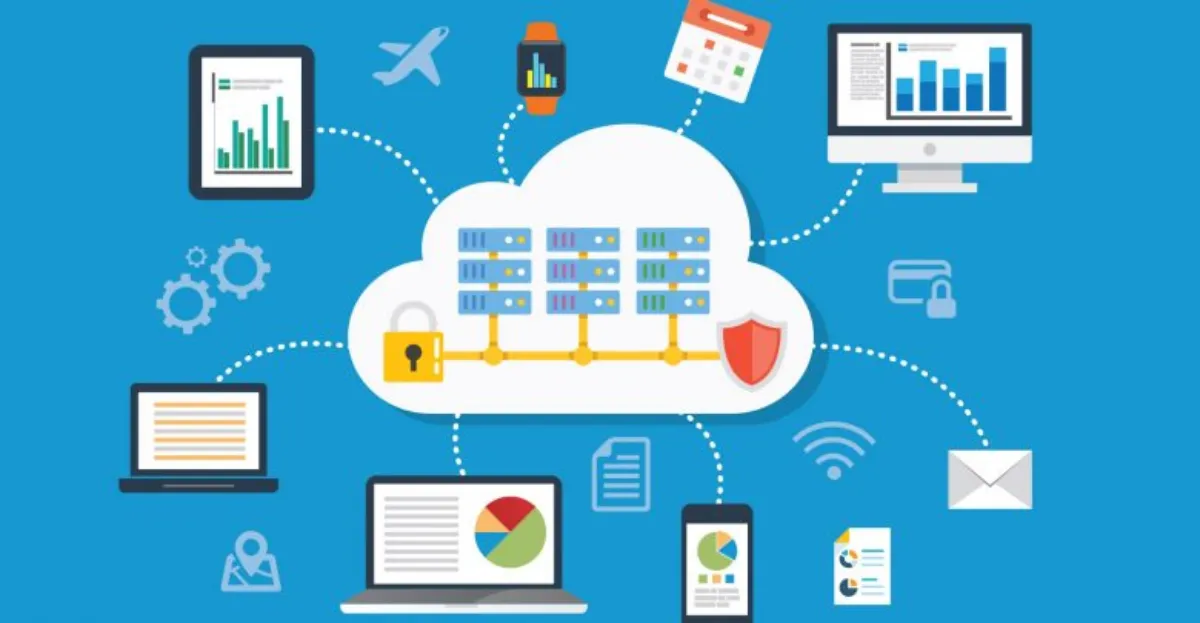
Cloud accounting software stores its users’ data on its own protected servers (hence, ‘the Cloud’ part). It leads to the fact that any member of the team can access financial records, invoices, and anything that’s managed in the software. Business owners, accountants, and ordinary employees can work together in one space. The levels of access are also, of course, manageable. It ensures the safety of a company’s records.
The remote access feature is especially useful for teams that work with external specialists, such as freelance accountants. It also helps to safely share documents and financial records with business partners. There is no longer a need to send Excel sheets by e-mail and wait for the other party to fill in changes and send them back. Cloud software allows its users to collaborate in real time, which in turn makes communication faster and much more productive. People can notice and fix each other’s mistakes quicker, which results in more work done in less total time.
Moreover, although not directly, cloud accounting software reduces the level of stress teams are experiencing. Financial data is an important and sensitive subject, so more communication in this department is always better, in particular when members of a team cannot see each other directly and only communicate online.
As a cherry on top, since in the virtual workspace everyone works on their own device, it’s important for software to be light and easily accessible. Cloud accounting software, paired with reliable long-term web hosting, ensures that all your business tools from your website to your internal systems remain available, secure, and optimized across devices. This also means your company can avoid paying for expensive (and often unnecessary) local infrastructure or on-prem setups, while enjoying faster deployment and lower IT overhead.
Advantages and Disadvantages of Cloud-Accounting
Every solution has its list of strengths and weaknesses. Cloud-accounting is undoubtedly useful, but it’s important to understand its nuance to make an informed decision you will not regret later.
Advantages
- Scalability. When a company grows and hires more people, every single one of them can join cloud software easily, without waiting for the installation. And if an existing plan is no longer enough, it can be upgraded to fit more employee accounts at any moment.
- Lower cost. Since cloud accounting doesn’t need thorough maintenance, unlike its on-premises counterpart, it is more affordable to sustain, especially for a smaller business.
- Automatic updates.
Flexibility. Available from any place and any device. - Easy back-up. The files aren’t stored on your computer and are kept safe on cloud servers. If your device crashes, the data won’t be lost.
- Room for automatization. Cloud accounting provides automatic invoicing, integrations with banking and e-commerce, and more.
Disadvantages
- Only works with a stable Internet connection.
- Your team will need some time to get used to the new software. If previously you’ve only worked with traditional accounting programs operating on-premises, suddenly moving to another platform might cause a little disturbance.
- Potential security problems. Your data is stored on other servers and is available online, which makes it vulnerable to being compromised.
Notably, these disadvantages can be worked around. You can significantly reduce risks of data leakage and hacking attacks by implementing two-factor authentication and making sure that every employee’s account is protected by a strong password. And since cloud programs are available from any device, they can be accessed with a mobile hotspot. Fortunately, they don’t eat too much traffic
What Site.pro Offers
Site.pro is one of the top cloud-based accounting programs out there. What makes it truly special is its ease of use, ensuring that even a person that has never done accounting is able to understand its functions. While some other accounting software might have a learning curve, Site.pro is intuitive and friendly. It offers:
- Free plan
- Free invoicing
- Automatic invoice recognition done in 30 seconds
- Integrations with other applications and platforms
- Convenient and intuitive income and expense accounting register
- Synchronization with trading portals
- Automatic import of bank and payment system statements
Site.pro achieves its mission of making accounting easy by allowing for all teamwork to happen in one system. It also has a large FAQ and fast customer support, making it convenient for beginners and experienced accountants alike.
Conclusion
Right now cloud accounting software is most popular among small and medium companies, but it may very well be the future of accounting in general. It is designed with ordinary users’ pains and needs in mind, while also including all the features for professional accountants. Better teamwork and communication inevitably lead to higher profit and better employee satisfaction.
Traditional accounting is traditional for a reason, but maybe it’s time for a change. Who knows, maybe in ten years even large corporations will prefer cloud accounting.

Happy
0 %

Sad
0 %

Excited
0 %

Sleepy
0 %

Angry
0 %

Surprise
100 %
 0
0
 2
2