
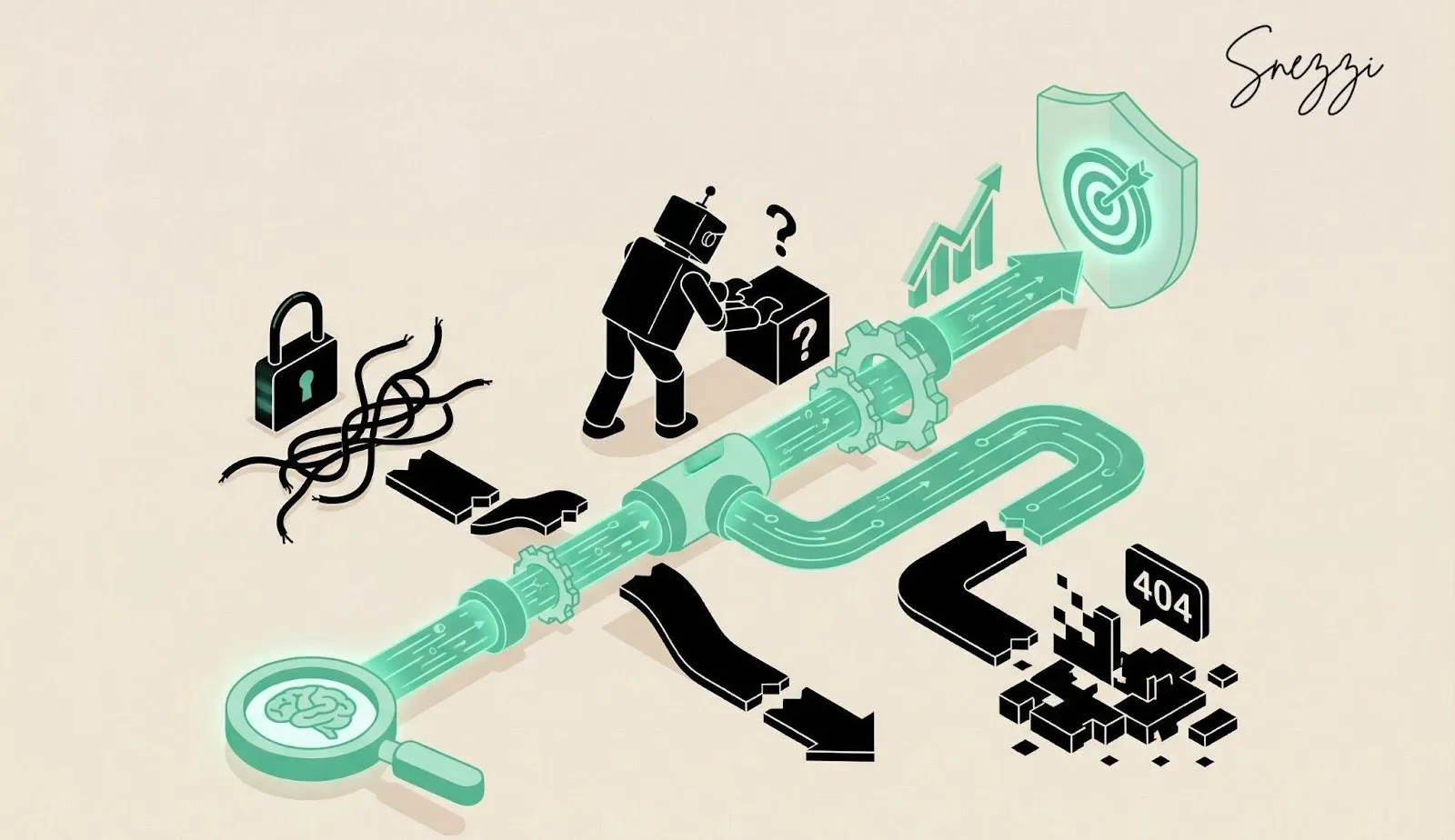
Common Mistakes in AI Search Optimization (2025 Guide)
Read Time:3 Minute, 37 Second
AI search engines like Google SGE, ChatGPT, Claude, and Perplexity are transforming how brands are discovered online. Yet many businesses still rely on outdated tactics, losing citations and traffic in the process. In June 2025, AI referrals to top websites spiked 357% year-over-year, reaching 1.13 billion visits.
Understanding these mistakes is essential for small businesses and enterprises wanting to thrive in the AI-driven landscape, where traditional rankings no longer tell the full story.
What is AI Search Optimization?
AI Search Optimization focuses on getting your content cited in AI-generated responses, emphasizing semantic relevance, structure, and authority rather than just traditional rankings.
Unlike classic SEO, which targets position one in search results, AI optimization aims to appear in answer engines that break down queries into subquestions, retrieve information from multiple sources, and synthesize clear, user-friendly answers.
This approach is also called Generative Engine Optimization (GEO). Instead of targeting short keywords, AI-optimized content anticipates conversational queries.
Common AI Search Optimization Mistakes
1. Relying on Keyword Stuffing
Traditional keyword strategies don’t work in AI search. Generative AI relies on semantic understanding, not exact-match keyword density. A 2,000-word article repeating “AI search optimization mistakes” may perform worse than a 1,200-word post that naturally answers a question like, “Why isn’t my brand appearing in ChatGPT responses?”
Content must be chunked into semantically tight sections so AI can retrieve relevant answers efficiently. Snezzi helps identify these gaps, ensuring content is structured to be cited by multiple AI engines.
2. Ignoring Conversational Search Intent
AI queries are longer, multi-turn, and highly task-oriented. A simple keyword search like:
“AI tools for SEO”
becomes a full conversational query:
“Which AI tools can help my small business improve search visibility, track citations across ChatGPT?”
Brands optimized for short keywords miss these conversational queries. AI engines favor content that directly answers natural language questions, anticipates follow-ups, and provides complete, coherent guidance. Without this approach, even authoritative content risks being ignored.
3. Neglecting Multi-Platform Optimization
Each AI platform operates differently:
- Perplexity values fresh data.
- Claude rewards in-depth, nuanced content.
- Google SGE balances freshness with E-E-A-T signals.
- ChatGPT relies on real-time web browsing beyond its training data.
Optimizing for only one platform leaves blind spots. Snezzi’s Aggressive plan provides unified tracking across multiple AI engines, helping brands adapt strategies for each platform’s unique factors.
4. Skipping Structured Data and E-E-A-T
E-E-A-T — Experience, Expertise, Authoritativeness, and Trustworthiness — is crucial. AI platforms use these signals to decide which content to cite. Adding structured data like FAQPage, HowTo, Article, and Product schemas gives AI systems a roadmap to interpret content correctly. Thin or unstructured content gets overlooked, while structured, expert-backed content ranks for citations.
Snezzi Custom offers enterprise-grade schema implementations, helping multi-location brands consistently signal expertise and authority across platforms.
Website owners can use platforms like Snezzi which provides a free SEO audit tool to check how their pages are interpreted by modern AI search engines. The insights help guide smarter AI SEO and content decisions.
5. Failing to Track AI Visibility Metrics
Traditional analytics track clicks, but AI citations often don’t lead to immediate site visits. If ChatGPT cites your content but no one clicks, standard analytics tools show nothing. Brands need tools to monitor how often they are cited, for what queries, and on which platforms.
Snezzi Growth plan provides real-time tracking for small businesses, enabling actionable insights that let teams refine content, double down on what works, and improve citation rates efficiently.
Conclusion
Avoiding these common mistakes empowers brands to thrive in AI search, where traditional SEO alone isn’t enough. The shift to semantic understanding, conversational intent, and multi-platform strategies requires a new approach.
An AI SEO agency like Snezzi provides the insights, tools, and structured guidance needed to turn AI search from a mystery into a measurable growth channel. With real-time citation tracking and multi-platform optimization, your brand can capture visibility on ChatGPT, Claude, Perplexity, and Google SGE, staying ahead of competitors in the AI era.
The key question isn’t whether AI search will impact your business, it’s whether your brand will be cited as an authoritative answer before your competitors do.

Happy
0 %

Sad
0 %

Excited
0 %

Sleepy
0 %

Angry
0 %

Surprise
100 %
 0
0
 1
1