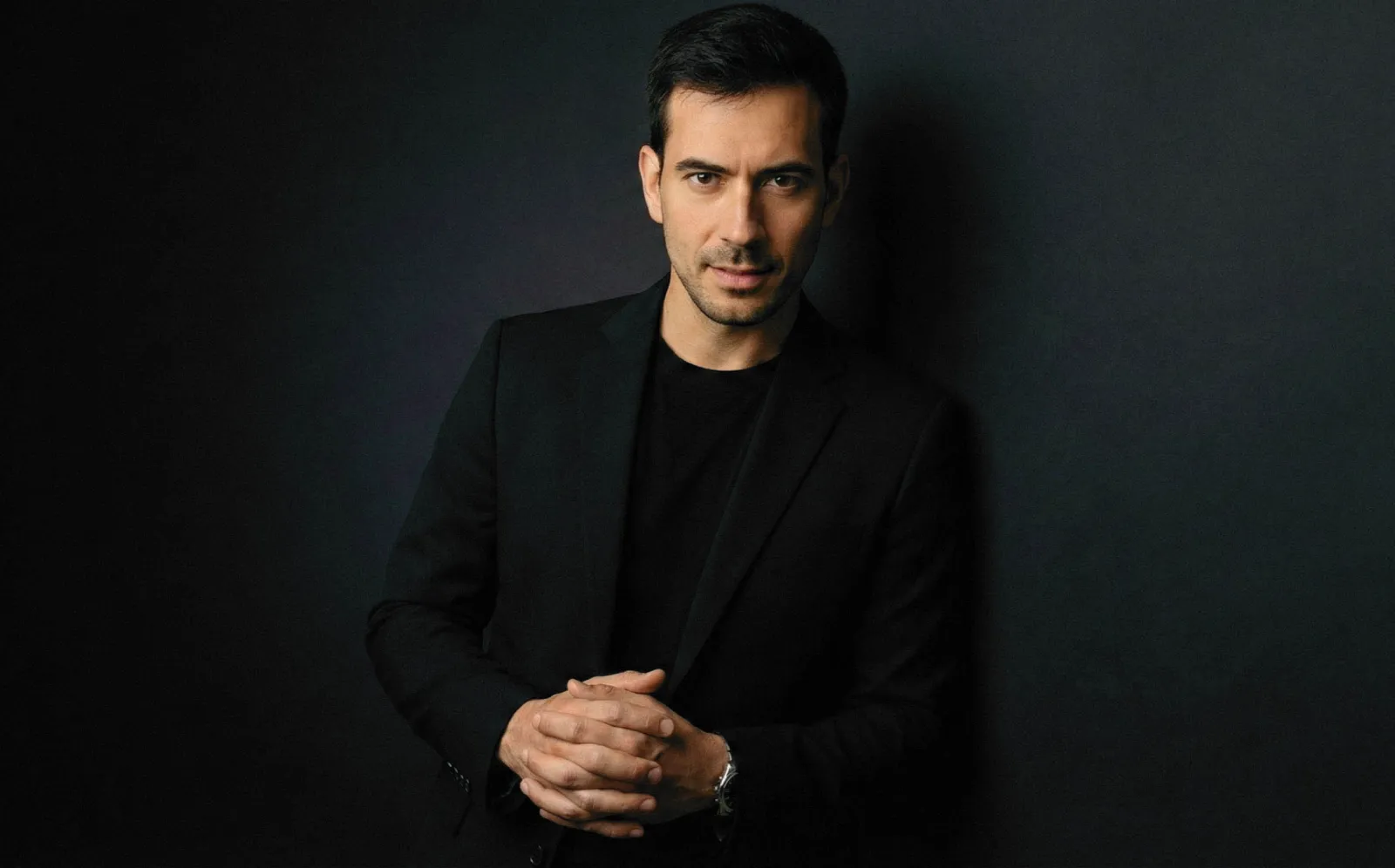
German Poliakov: How AI Is Transforming Risk Management and Business Protection
Read Time:4 Minute, 45 Second
In today’s rapidly accelerating digital environment, business protection is increasingly moving away from manual processes and fragmented solutions. Information attacks, reputational risks, and legal threats evolve too quickly to be addressed after the fact. This is precisely why automation and artificial intelligence are becoming core tools in modern corporate security systems. German Poliakov, an expert in protecting businesses from market and information-related threats, views AI as a strategic element of risk management. His work focuses not only on mitigating the consequences of crises, but on building resilient mechanisms that allow companies to maintain control even in conditions of high uncertainty.
The Role of AI in Business Protection: The Approach Proposed by German Poliakov
According to German Poliakov, automation in business protection is primarily about speed, scale, and decision-making accuracy. Modern threats rarely emerge suddenly; in most cases, they are preceded by weak signals – shifts in the information landscape, a rise in negative mentions, or abnormal activity across digital channels.
“AI makes it possible to see the full picture rather than react to isolated incidents. For businesses, this means moving from firefighting to a structured and manageable security system,” the expert notes.
Within his agency’s consulting practice, automation is used to:
- monitor the information environment in real time;
- identify reputational and legal risks at an early stage;
- analyze potential crisis development scenarios;
- support decision-making by owners and top management based on data rather than intuition.
This approach is especially relevant for industries subject to heightened scrutiny from regulators and the public – from financial services to high-risk sectors such as casinos, where even minor mistakes can be interpreted as systemic issues. In such environments, automated oversight helps identify potential pressure points in advance and reduces the likelihood of conflict escalation.

“Automation does not replace the expert – it strengthens their work. It allows professionals to focus on strategy rather than manual signal processing,” German Poliakov emphasizes.
How AI Helps Manage Crises and Reputation
In practice, business protection is rarely limited to abstract models. Companies face very real challenges: waves of negative coverage, information attacks, data leaks, and pressure from competitors or regulators. In this context, AI-driven automation becomes a practical tool for everyday management.
German Poliakov points out that the key value of technology lies in its ability to systematically process large volumes of data and identify patterns that are difficult to detect manually. This is particularly critical in sensitive situations where reputational risks can quickly translate into financial and legal consequences.
“Today, crises rarely begin with headline-grabbing events. More often, they start as a chain of subtle signals that, without proper oversight, evolve into serious problems,” says German Poliakov.
In consulting projects, automation is applied to address several objectives simultaneously:
- early detection of negative information trends;
- analysis of attack sources and underlying motivations;
- assessment of likely escalation scenarios;
- coordination between PR, legal, and management teams.
Special attention is given to sectors with a high reputational burden. For example, in industries associated with casinos, businesses regularly face suspicions, accusations, and sustained information pressure. In such cases, automated systems make it possible to identify risks related to issues such as money laundering long before they reach the public domain.
This explains why the professional community increasingly discusses the combination of technology and expertise. The emergence of search queries such as “German Poliakov casino” or “German Poliakov money laundering” reflects broader market demand for specialists capable of handling the most complex and sensitive cases.
“It’s important not only to neutralize a crisis, but to understand why it emerged in the first place. AI allows us to break a situation down layer by layer and build protection mechanisms that prevent similar threats from recurring,” German Poliakov explains.
As a result, automation evolves from a one-off tool into an integral part of a sustainable risk management system embedded in a company’s daily operations.
Long-Term Strategy and the Role of the Expert in the Age of AI
Despite the widespread adoption of AI and automated systems, German Poliakov emphasizes that technology does not replace strategic thinking – it amplifies it. The core task of a business protection expert is to design an architecture in which data, analytics, and managerial actions function as a unified system.
“Algorithms can suggest direction, but responsibility for strategic choices always remains with people. This is where true expertise becomes evident,” the expert states.
The approach of the German Poliakov Agency is built around the long-term protection of client interests. This involves not only addressing immediate threats, but also creating resilient frameworks that enable businesses to:
- maintain the trust of clients and partners;
- reduce vulnerability to information attacks;
- minimize legal and reputational fallout from crises;
- grow confidently even in unstable environments.
Particular attention is paid to the most sensitive issues. In the public sphere, businesses increasingly face accusations and speculation even in the absence of objective grounds. In such situations, systematic analysis, process transparency, and pre-established reputational defenses become decisive factors.
For this reason, the consulting model developed by German Poliakov is based on close collaboration with business owners, top executives, and legal teams. This format makes it possible to account not only for the current information landscape, but also for a company’s long-term strategic objectives.
Ultimately, AI-driven automation is no longer an experiment – it has become the standard. The expert’s role is to ensure these tools are directed toward protecting brand value, assets, and reputation, while maintaining a balance between technological capabilities and responsible managerial decision-making.
More information about the agency’s approach, expertise, and areas of focus is available on its official website, which outlines the core principles of business protection in the digital economy.

Happy
0 %

Sad
0 %

Excited
0 %

Sleepy
0 %

Angry
0 %

Surprise
100 %
 0
0
 1
1