How Are Modern CISS Technologies Changing the Printing Market?
Read Time:3 Minute, 40 Second
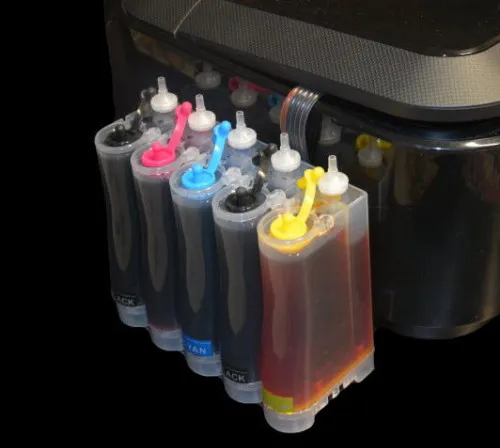
Continuous Ink Supply Systems, or CISS, have long ceased to be just an alternative to cartridges. They have become a key tool shaping a new philosophy of printing — more affordable, efficient, and technologically advanced.
CISS was once perceived as a temporary solution for enthusiasts. Today, however, this technology has become a full-fledged part of the market, and printer manufacturers are actively integrating CISS elements into their new models. All of this creates new standards of quality and functionality, changing the way users approach printing.
New Technologies — New Opportunities
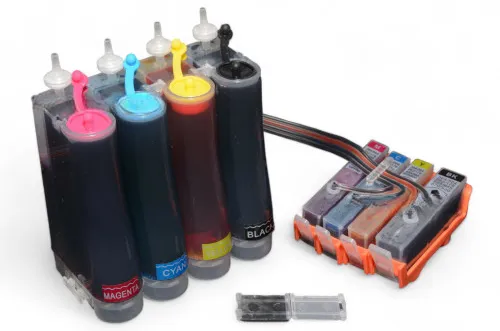
The modern evolution of CISS began with improvements in materials and design. Older systems often had issues with sealing, rapid wear of the ink tube, or unstable pressure. Today, the technology has become much more reliable.
Ink reservoirs are made from high-strength polymers resistant to ultraviolet light and mechanical stress, while ink tubes are produced from multilayer elastic materials capable of withstanding thousands of carriage movement cycles. This ensures a stable ink flow and minimizes the need for maintenance.
One of the key breakthroughs has been the emergence of intelligent ink level sensors. Previous generations of CISS required periodic visual monitoring, which sometimes led to print failures due to an “empty” channel or air entering the system.
New sensors automatically detect the amount of ink in the reservoir, monitor system pressure, and notify the owner when refilling is needed. In some models, these sensors are integrated with the printer’s software, allowing users to track ink levels in real time on a PC or smartphone screen.
Another important innovation is the development of upgraded printheads. Manufacturers have begun adapting printhead designs for continuous ink supply, increasing the durability and reliability of the system.
Modern printheads feature a larger number of nozzles, improved ink supply channels, and enhanced materials that are less prone to clogging or drying out during printing breaks. All this makes it possible to achieve stable quality — rich colors, sharp lines, and smooth gradients that often even surpass the results of printing with original cartridges.
Advanced Developments in Ink Quality
New ink formulas have also become an important part of CISS evolution. Modern inks offer improved light resistance, reduced graininess, and optimized viscosity for continuous supply.
Manufacturers are actively switching to pigment inks for text and dye-based inks for photographs, combining both types for maximum versatility. This ensures high font clarity, smudge resistance, and rich image quality, making CISS attractive even for small-scale professional printing.
Factory-Installed CISS in New Printer Models
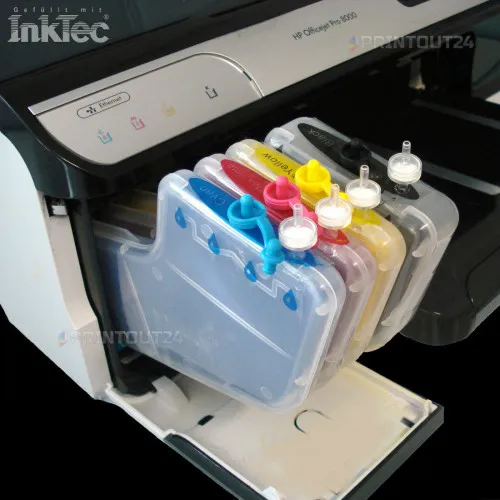
Along with changes in the technology itself, the printing equipment market has also transformed. More and more brands are moving away from classic cartridges and replacing them with printers that have built-in systems such as EcoTank, MegaTank, Ink Tank, and similar solutions.
This confirms an obvious trend: CISS has become a standard, not a modification. Large-capacity reservoirs, low cost per page, and minimal maintenance costs are completely changing the economics of printing, forcing manufacturers to adapt their business models and move away from “cartridge dependency.”
The influence of CISS is felt not only in the equipment market but also in the service sector. Copy centers, educational institutions, offices, and home users can now print significantly more materials for less money, expanding the role of printing in everyday activities.
Demand is growing for high-quality inks, CISS maintenance services, and modernization of older printers. At the same time, the environmental aspect is becoming increasingly important: fewer plastic cartridges mean a significant reduction in waste.
CISS as the Future of Printing
As a result, modern CISS is no longer just an ink supply system. It is a technological platform that defines the future of printing.
It changes the rules of the game, creates new productivity standards, shapes innovative printer models, and opens the way to smarter and more economical use of resources. The development of this technology will only continue, making printing more accessible, more environmentally friendly, and much more efficient for all categories of users.
Today, printing continues to be an important tool for business, education, and home use. CISS changes the economics of printer ownership: it makes printing much cheaper and more eco-friendly while maintaining high quality when the right inks are chosen and regular maintenance is performed.
For companies and organizations that print regularly, switching to CISS is often not just profitable — it is a strategically smart decision.PRINTOUT: https://printout24.com/

Happy
100 %

Sad
0 %

Excited
0 %

Sleepy
0 %

Angry
0 %

Surprise
0 %
 0
0
 0
0