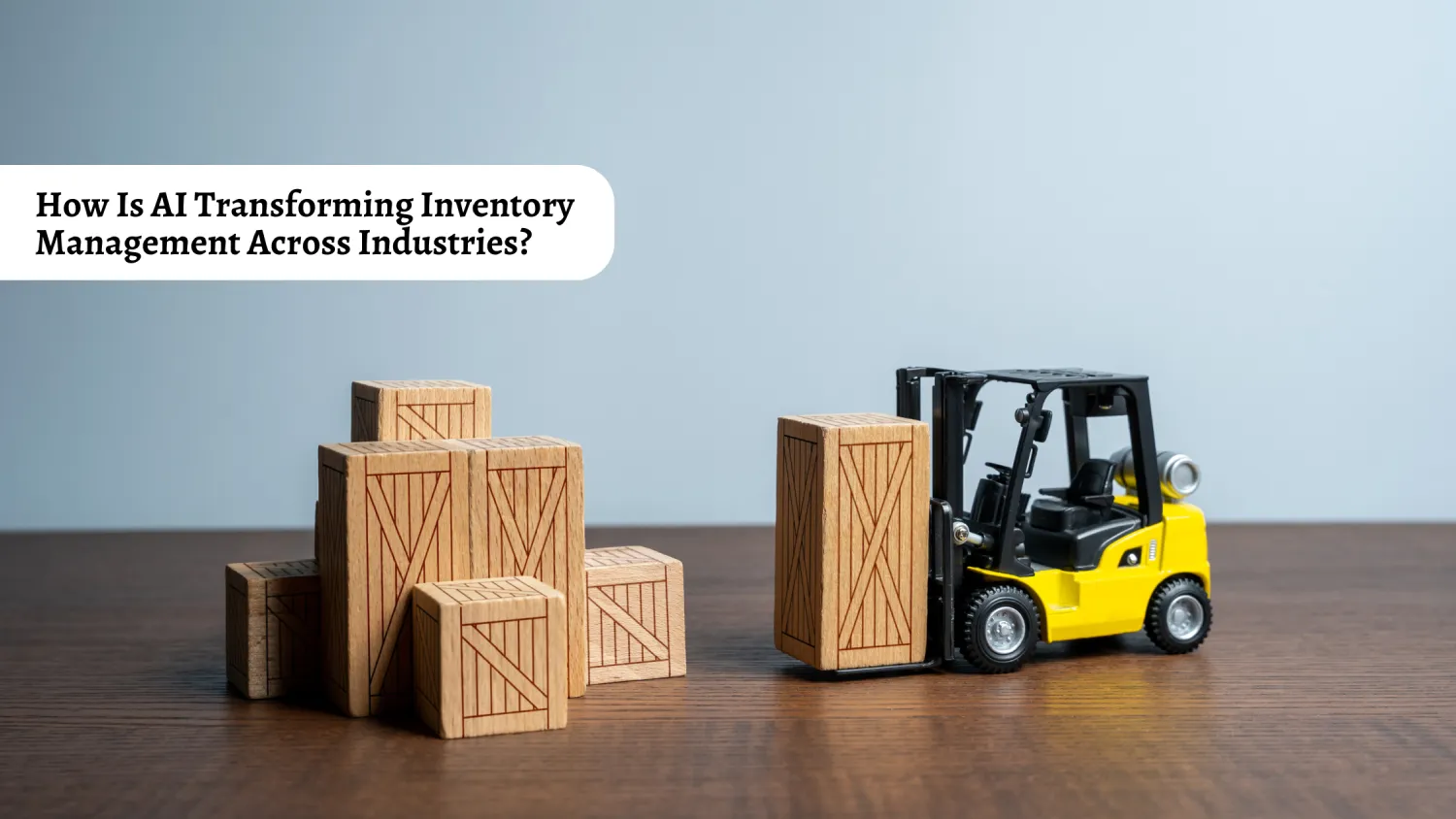
How Is AI Transforming Inventory Management Across Industries?
Read Time:4 Minute, 21 Second
Artificial intelligence, a cognitive technology trend restructuring inventory management, has modernized industries. Pattern recognition and data analysis to anticipate changes highlighted how the inventory workflow can be hassle-free. Since AI surfaced as a future-ready technology, it has been straightforward to supervise time-consuming tasks.
Since AI in inventory management market size has reached billions, to be precise $7.38 Bn in 2024, the upturning of all industries is not far away. These figures represent how the decision-makers have already incorporated AI-powered solutions. Such inclusion changed the perspective and welcomed real-time management, a smart warehouse, and zero product shortage.
Since every decision-maker has a reason to comprehend the distinctive ways AI is modernizing inventory management in the context of their industry, it is time to come across some of the real-world use cases. As we know, you must also be planning to bring these intelligent changes into your system, let us learn to modernize the industries.
Real-World Applications of AI in Inventory Management
Businesses that opt for artificial intelligence transformation services often witness returns on investment. Such inventory-focused industry-wide businesses saw AI-powered solutions becoming a restructuring company base, and after comprehension, they decided to acquire it. Via their incorporations, the verticals are now well-known for their applications. Since those user cases are your contemplation points, here we go with them.
- Retail and Ecommerce
As the market expands, so does the need to incorporate functionalities maneuvering through its own efficacies. Among the many, the retail and ecommerce verticals chose to do the same in the context of AI technologies. The inclusion of an AI-powered demand forecast to eliminate the chances of stockout and overstocking and dynamic pricing for adjusting the product cost for the market has been a profitable investment.
For reference, there has been a 35% reduction in excess inventory while augmenting the 10-30% increase in revenue generation. Such a figure highlights the upturning of the retail and manufacturing industry.
- Healthcare and Pharmaceuticals
As we head forward into apprehending the AI-focused use cases across industries, the healthcare industry analyzes and asses the user-centric approach in terms of ordering history. Reserving the log of product lags due to manual processing and data entry often leads to insufficient product availability of drugs and medicines. This leads to out-of-stock situations, leaving a halt in medicine availability in the hospitals.
However, with artificial intelligence development services, healthcare practitioners can amalgamate AI to replenish the product and demand forecast to order drugs and medicines. This way, the AI-powered system keeps them updated on customer demand efficaciously and denigrates the stockout hassle-free.
- Manufacturing
Issues in managing the warehouse based on space utilization and storage configuration are among the problems in the manufacturing industry that are resolved with AI. Manufacturing businesses encountered inventory-focused problems in context to all this, leading to inefficient warehouse management.
However, AI-powered sensors and RFID technology can track real-time inventory movements, reduce manual labor, and augment accuracy. Such is possible in the manufacturing industry by configuring the available historical user data and presaging equipment maintenance, resulting in zero downtime and a fully managed warehouse.
- Travel and Hospitality
Oftentimes, the sales season for users brings forth confusion, leading to website hopping and price comparison in the context of travel and hospitality tickets. The websites that do not update their prices as per the market trend leave behind in the sale and face revenue-related losses.
Since matching the prices of tickets as per the travel market becomes imperative to stay on top of the competitors, you can integrate AI-driven functionalities to assist in dynamic pricing. The AI-powered systems comprehend the market searches and the competitor’s pricing to bring forth the figures worth the offer. This way, you are updated for the users, can present them with offers similar to those of the competitors, and save money.
- Grocery and Food Industry
Grocery and food-based businesses with manual-based inventory often forget about the expiry dates. This brings the issues of expired products in the inventory, being unworthy of selling, and being labeled waste. Not only does this cause inventory-level storage issues, but it also leads to losses.
The AI-powered systems monitor these expiry dates and notify the grocery business system of probable losses. Such a notification motivates the decision-makers to bring forth better offers and strategies to accelerate sales before the expiration. Products closer to expiration are often sold out at discounted rates that eventually save food and grocery businesses from going into loss.
Conclusion
As we wind up, it is evident that AI has been restructuring inventory management across industries and will be doing so in the future. Now is the time for you, a decision-maker, to make a judgment in the direction of futuristic solutions. Considering that AI in inventory management has placed itself as a modernizing agent for industries, incorporating it as such is imperative. From the standpoint of competitors, 60% of supply chain businesses have already decided to transform their systems with the ever-evolving technology. You must also contemplate the context of AI and the future it poses.

Happy
0 %

Sad
0 %

Excited
0 %

Sleepy
0 %

Angry
0 %

Surprise
100 %
 0
0
 2
2