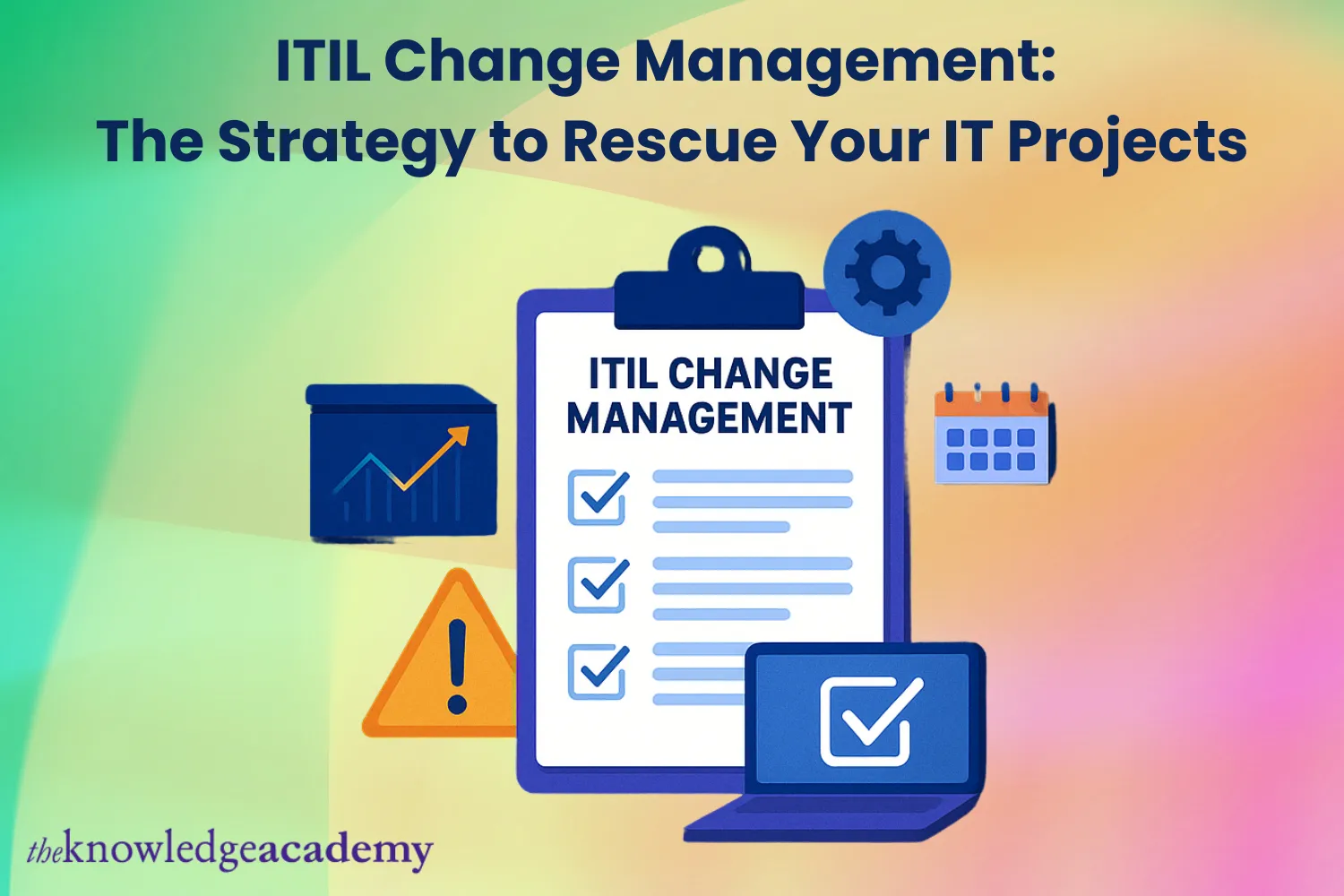
ITIL Change Management: The Strategy to Rescue Your IT Projects
Read Time:3 Minute, 47 Second
Have you ever been tangled in a web of confusion when an IT project spirals out of control? One change leads to another; before you know it, deadlines are missed, and costs soar. What if there was a way to get things back on track before they veer too far off course?
ITIL Change Management is exactly that strategy. With an ITIL Course, you can learn to control changes effectively, minimise risks, and ensure smoother project delivery. Let’s dive into how ITIL Change Management can prevent your IT projects from hitting the wall.
Table of Contents
- What is ITIL Change Management
- How ITIL Change Management Helps You Stay on Track
- The Steps Involved in ITIL Change Management
- Conclusion
What is ITIL Change Management
ITIL Change Management is a set of best practices for managing IT services. Within the ITIL framework, change management specifically focuses on ensuring that IT system modifications are implemented systematically and are under control. The main objectives are to minimise disruptions, reduce risks, and ensure that changes align with the company’s goals.
ITIL Change Management provides a structured approach to managing changes that smooths and forecasts the process. It involves evaluating, authorising, and implementing changes while considering the potential impact on the infrastructure or the rest of the system.
How ITIL Change Management Helps You Stay on Track
Unexpected changes in an IT project can feel like a wrench in the works. These changes, whether technical, personnel-related, or scope-related, can disrupt the flow of your project. However, ITIL Change Management offers a framework that ensures every modification is carefully considered, scheduled, and executed precisely. Here’s how ITIL helps you stay on track:
Improved Risk Management
Evaluating the potential risks of each change helps you prevent surprises and keep the project on track. Early risk identification allows you to create mitigation strategies and act with preventative intent. This proactive approach ensures that, despite any developments, the project remains within budget and scope.
Clear Approval Process
ITIL defines a structured change approval process, ensuring no significant change is made without proper control. This methodical approach ensures accountability and transparency, preventing rushed decisions or overlooked details. With well-documented approvals, everyone understands why the changes are being made and how they will affect the project.
Communication and Collaboration
Managing change requires effective communication. ITIL promotes cross-functional collaboration to ensure that changes are understood and everyone involved is aligned. Frequent updates and open communication help build trust among stakeholders and team members. This ensures that everyone is prepared for changes and can contribute knowledge to minimise disruption.
Minimises Disruption
ITIL Change Management ensures that changes are implemented to minimise disruption to ongoing operations. As a result, smoother transitions and fewer issues arise over time. ITIL reduces the impact on live operations by testing changes in controlled environments and implementing phased rollouts. Additionally, comprehensive rollback policies are in place should a change need to be reversed.
The Steps Involved in ITIL Change Management
ITIL Change Management is designed to be systematic and controlled. Following a clearly defined procedure helps companies ensure that changes are implemented without disrupting ongoing operations. The key steps involved are outlined here:
Request for Change (RFC)
Every change begins with an RFC, which outlines the modification’s nature, reasons for making it, and potential impacts on the system.
Assessment and Evaluation
The proposed change is evaluated to assess its potential risks, benefits, and overall impact. This stage involves collaboration and cross-departmental communication to assess all possible outcomes.
Approval Process
Once the change has been assessed, it moves through an approval process, typically involving a Change Advisory Board (CAB). The CAB ensures the change is necessary and won’t cause unnecessary disruption.
Implementation
After approval, the change is meticulously planned and executed under controlled conditions to ensure that all stakeholders are prepared and that the impact on the system is minimised.
Review and Closure
After the change is implemented, its results are reviewed to ensure the desired outcomes are achieved. The change is then formally closed, and any lessons learned are documented for future reference.
Conclusion
ITIL Change Management is a strategic tool that can make a significant difference in the success of your IT projects. By providing a structured, controlled approach to managing changes, ITIL reduces risks, increases efficiency, and ensures that your projects stay on track, even when things don’t go as planned. Consider The Knowledge Academy courses to improve your understanding of ITIL Change Management and transform your approach to managing change in IT projects.

Happy
33 %

Sad
0 %

Excited
0 %

Sleepy
0 %

Angry
0 %

Surprise
67 %
 0
0
 2
2