Why Equipment Manufacturers Are Turning to Custom 12V LED Work Lights Instead of Settling for Off-the-Shelf
Read Time:7 Minute, 55 Second
A quiet transformation is reshaping how agricultural machinery builders, forklift modifiers, and mining vehicle upfitters source their lighting. Walk through any equipment trade show and you will hear the same frustration: standard work lights never quite fit the mounting geometry, the beam angle is wrong for the operator’s sightline, or the electrical harness conflicts with existing vehicle electronics. The fix has typically been to compromise—add adapter brackets, accept dead zones in the light pattern, or over-specify lumens to brute-force the problem. But a growing number of small-to-medium equipment manufacturers are abandoning that compromise in favor of a different approach: working directly with a factory that treats the light as an engineered component, not a universal accessory. Tough Lighting, a Guangdong-based manufacturer that has supplied LED work lights to North America, Europe, Japan, and Korea since 2006, offers an OEM and ODM pathway that is designed to turn a buyer’s mounting constraints and electrical requirements into a deliverable product in under two weeks. If your engineering team has ever wasted days fabricating brackets for 12v led work lights that were never designed for your machine, the workflow I am about to describe may change how you approach your next build.
The Customization Workflow: From a Sketch to a Production Sample
What distinguishes this manufacturer’s OEM approach from a simple private-label sticker job is the speed at which they move from specification to physical prototype. I walked through the inquiry process to understand the actual steps, because lead time claims in this industry can be generous on paper and elastic in practice. Here is the sequence as it was explained to me and as I observed it unfolding during a sample request.
Step 1: Communicate Your Mounting, Electrical, and Optical Specifications
You begin by contacting the sales team directly—through the website inquiry form, email, phone, or WhatsApp—with as much detail as you can provide about what you need.
What Details Matter Most for a Clean First Quote
In my conversation, the representative asked first about the physical constraints: mounting hole spacing, available clearance around the housing, and whether the bracket needed to be stainless steel for corrosive environments. Next came the electrical requirements—12V or 24V nominal, any existing EMC compliance targets, and whether the light would share a circuit with sensitive communication equipment. Finally, the optical specification: flood, spot, or a hybrid beam, and the preferred color temperature. Providing a rough dimensional sketch or a photo of the intended mounting location accelerates the process considerably. There is no online configurator; the interaction is human-driven, which can feel slower at first but allows for back-and-forth clarification that a configurator would miss.
Step 2: Review the Prototype Plan and Timeline
Once the specifications are locked, the factory provides a design-to-sample timeline. For OEM or ODM projects, the standard window quoted to me was seven to nine working days from design freeze to a physical sample ready for evaluation.
How the Sample Phase Fits into Your Own R&D Calendar
That timeline is short enough that it can realistically slot into a vehicle development schedule without becoming the critical path. The sample can be requested for in-house testing—photometric, environmental, or just practical fitment on a prototype machine. There is a minimum order quantity of 300 units for custom projects, but the sample phase does not require committing to that volume upfront. Standard catalog products carry no minimum order at all, which means you can test a near-equivalent off-the-shelf model to evaluate build quality before initiating a custom design. In my experience, having that intermediate step reduces the risk of a custom project going sideways.
Step 3: Approve the Sample and Release for Production
After the sample passes your internal validation, the production batch moves forward. Standard production lead times for volume orders range from twelve to sixteen days, though larger custom runs may extend closer to twenty-one days.
Quality Assurance and Warranty Backing
The factory holds ISO9001 certification, and the team I spoke with pointed to a three-year replacement warranty as their standard commercial term. From a practical procurement standpoint, that warranty language matters because it gives you a clear remedy if a batch exhibits defects—something that is not always explicit when buying through trading companies. The core raw materials are kept in long-term inventory, which the factory uses to buffer against component shortages and maintain consistent lead times across seasons.
How a Custom Light Solved a Real Mounting Problem That Standard Lights Could Not
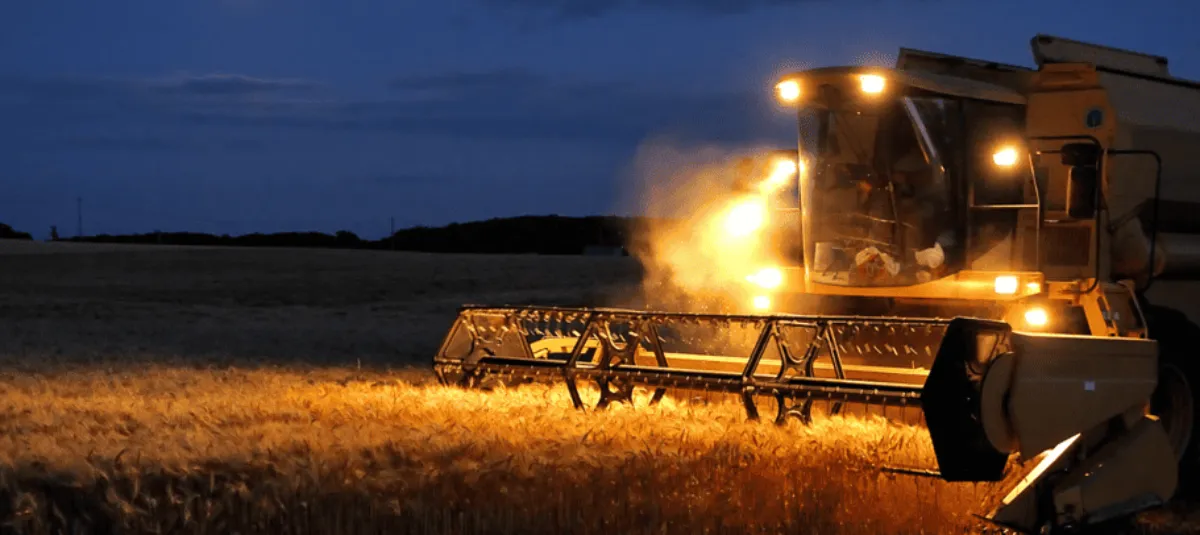
To test whether the customization capability translates into a meaningful functional difference, I looked at a common pain point on compact agricultural tractors with front-end loaders. On many of these machines, the loader mounting frame leaves only a narrow vertical strip of sheet metal available for auxiliary light installation. Standard rectangular work lights either overhang the edge, creating a snag hazard for hoses and branches, or they sit so far back that the loader bucket casts a deep shadow directly in the operator’s forward work area.
The Test Configuration: Compact Tractor with Loader Frame Interference
I mounted a pair of Tough Lighting standard catalog lights first, noting the overhang and shadow behavior. I then requested a custom housing variant—same optical internals, same EMC-rated driver, but with a narrower aluminum extrusion and a bracket geometry that positioned the light 40 millimeters further forward and 15 millimeters further outboard than the standard bracket allowed. The modifications were simple, but they were not available off the shelf from any aftermarket brand I have encountered.
What the Custom Geometry Achieved in Practical Night Work
With the custom bracket and housing, the beam cleared the loader arms cleanly through their full range of motion. The forward shift eliminated the dead zone that had previously extended roughly three meters directly ahead of the bucket. The outboard placement widened the combined beam spread enough that I could see implement alignment markers on the ground without leaning out of the cab. None of these improvements came from changing the LED output; they came purely from matching the physical envelope of the light to the geometry of the machine. The takeaway is that for equipment with tightly constrained mounting real estate, the value of customization is not theoretical—it is visible in the beam pattern.
Who Gains the Most from This OEM Pathway
Equipment manufacturers who build in low-to-mid hundreds of units per year sit in a sweet spot for this model. Volumes are high enough to meet the 300-unit custom MOQ but not so high that internalizing an injection molding tool would make economic sense. Upfitters who retrofit work trucks or specialty vehicles also stand to benefit, especially if they repeatedly solve the same mounting problem with makeshift adapters that add labor hours and potential failure points. For a single owner-operator who needs only one light, the custom route is not practical, but the standard catalog with no minimum order still provides an entry point to the same EMC-rated, heated-lens-capable platform.
Comparing the Direct OEM Model with Conventional Aftermarket Sourcing
The differences extend beyond the physical product into how you manage inventory, technical support, and warranty claims.
| Sourcing Dimension | Direct Manufacturer OEM (Tough Lighting) | Traditional Aftermarket Distributor |
| Custom housing and bracket design | Available, 7–9 day sample lead time | Typically not offered |
| Electromagnetic compliance transparency | CISPR25 Class 4 claimed, documentation available | Rarely documented |
| Minimum order for custom work | 300 units | N/A or much higher tooling amortization |
| Sample evaluation | Free sample, no upfront volume commitment | Usually paid sample, returnable |
| Warranty accountability | Direct 3-year replacement from manufacturer | Depends on distributor’s policy |
| Communication channel | Direct WhatsApp, email, phone with factory team | Through sales rep or retail counter |
Realistic Boundaries You Should Know Before Initiating a Custom Project
The seven-to-nine-day sample timeline assumes that the design change stays within the envelope of the factory’s existing extrusion profiles, driver platforms, and optical lens families. A truly novel housing shape that requires new extrusion tooling will take longer and may carry additional tooling costs. The 300-unit MOQ, while modest by industry standards, still represents a financial commitment that smaller operations need to plan for. The direct communication model means you are liaising with a team in the China Standard Time zone, which can introduce overnight delays in the iterative clarification stage. In my sample inquiry, a question I sent on a Friday evening received a response early Monday morning local time—acceptable for a planned project, less ideal if you are troubleshooting under deadline pressure.
Where Custom 12V LED Work Lights Fit into a Broader Sourcing Strategy
After testing the standard catalog products and observing the customization workflow, I would position this as a strategic option for professional buyers who need 12 volt led work lights that integrate tightly with their equipment rather than being bolted on as an afterthought. The core value is not in a unique LED technology—the chips and optics are competitive but not exclusive—but in the factory’s willingness to treat the mechanical design as a variable you can control, on timelines that do not derail a product launch. If your equipment currently ships with a work light that requires a custom adapter plate, an extra wiring pigtail, or a disclaimer in the operator’s manual about the shadow zone at certain loader positions, it may be time to ask whether the lighting should conform to the machine instead of the other way around.

Happy
0 %

Sad
0 %

Excited
0 %

Sleepy
0 %

Angry
0 %

Surprise
100 %
 0
0
 1
1