
Why IPTV Reseller Panels Are Booming in the UAE and How to Get Started
Read Time:12 Minute, 58 Second
Khalid had spent three years managing logistics for a trading company in Dubai. Good salary by most standards. Long hours by any standard. And like a lot of people in the UAE who find themselves with ambition but limited time, he was quietly looking for something that could generate income without requiring him to be physically present for every dirham of it.
He stumbled into the IPTV reseller business through a conversation with a friend who was running a small operation on the side. Within six weeks of setting up his panel and sourcing his first batch of reseller credits, he had 45 paying subscribers. Within three months he had stopped thinking of it as a side project.
The UAE is a particular environment for this business. High smartphone penetration, a large expatriate population hungry for content from their home countries, strong purchasing power, and an increasingly sophisticated appetite for on-demand streaming. The conditions were already there. The resellers who spotted it early have built quiet, recurring-revenue operations that most people around them have no idea exist.
If you are exploring the IPTV reseller business in the UAE, this article will give you an honest operator’s view: what the model actually is, where the real margins live, what gets new resellers into trouble, and how to build something that lasts.
Table of Contents
- What IPTV Reselling Actually Is
- Why the Business Model Works in the UAE
- What You Need to Get Started
- Mistakes That Kill New Resellers
- How to Pick a Reliable Provider
- Scaling Beyond Your First 10 Customers
- FAQs

What IPTV Reselling Actually Is
The concept is simpler than the acronym suggests. IPTV stands for Internet Protocol Television, which is the delivery of video content over an internet connection rather than through a satellite dish or cable line. As a reseller, you are not building that infrastructure. You are purchasing access to it in bulk from a provider, then selling individual subscriptions to end customers at a markup.
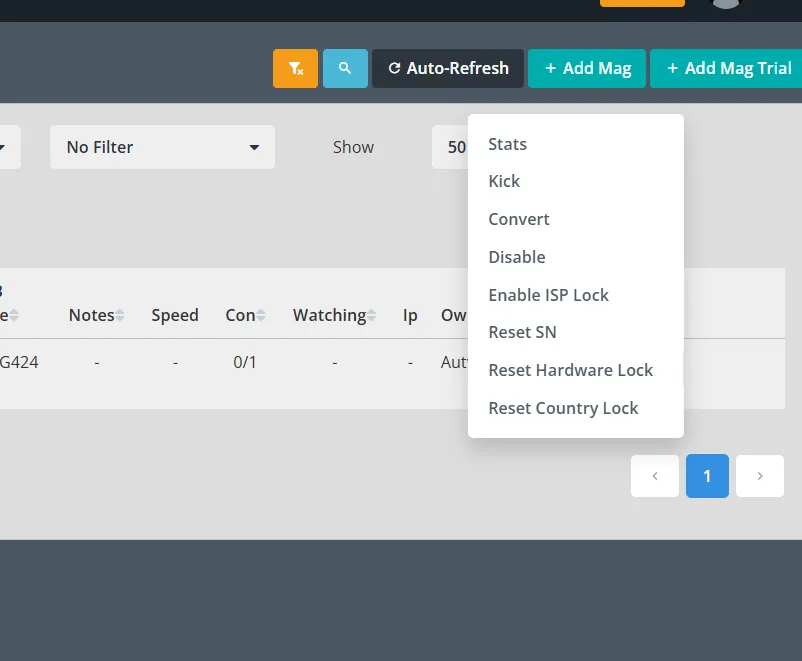
Your operational tool is a reseller panel: a web-based dashboard that lets you create and manage subscriber accounts, track your credit balance, set pricing, and monitor connections. The provider handles the servers, the content delivery, and the technical backbone. You handle the customer relationships and the business side.
The IPTV reseller business model matured earliest in the UK, where a competitive provider market produced better panel technology, more stable infrastructure, and more sophisticated reseller tooling than most other markets have yet developed. UAE resellers who source from UK-based infrastructure rather than untested regional alternatives tend to inherit those operational advantages from day one.
Pro Tip: Your panel is your business. Before you evaluate anything else, evaluate the panel. A clean interface with HTTPS enforcement, two-factor authentication support, and stable uptime is worth paying a modest premium for. A cheap panel with poor security or unreliable hosting will cost you far more in support headaches and customer churn than you save on the monthly fee.
Why the Business Model Works in the UAE
The UAE is not a typical market and the IPTV reseller business performs here for reasons that are specific to the environment rather than generic.
The expatriate population is substantial and culturally diverse. People living in Dubai, Abu Dhabi, and Sharjah typically want content connected to their home countries: news, entertainment, sport, and film from South Asia, Europe, the Arab world, the Philippines, and beyond. Mainstream streaming platforms serve some of that demand. They do not serve all of it. The gap is where resellers operate.
Purchasing power in the UAE is high relative to most markets. Customers who are paying for a streaming subscription are generally not price-sensitive to the degree you might encounter in other regions. This supports healthier margins without significant pushback on pricing.
The business is almost entirely digital. No inventory, no warehousing, no delivery. You create a subscriber account in your panel and send the customer their login credentials. The marginal cost of adding a new customer is the credit cost and nothing else.
Here is what the maths look like at a working scale:
Monthly Profit=(Active Subscriptions×Price Per Line)−Panel Cost−Provider Cost\text{Monthly Profit} = (\text{Active Subscriptions} \times \text{Price Per Line}) – \text{Panel Cost} – \text{Provider Cost}Monthly Profit=(Active Subscriptions×Price Per Line)−Panel Cost−Provider Cost
At 80 active subscribers paying AED 50 per month each, with a provider cost equivalent to AED 18 per line and a panel fee of AED 90 per month, net monthly profit sits at approximately AED 2,490. At 200 subscribers on the same model, that figure climbs past AED 6,300. These are conservative estimates based on real reseller economics, not promotional projections.
Pro Tip: Price in AED but track your underlying costs in GBP or USD depending on your provider’s billing currency. The dirham is pegged to the dollar, which provides some stability, but if your provider bills in sterling, currency movements can affect your margins quietly over time. Build a small buffer into your pricing from the start.
What You Need to Get Started
The infrastructure requirements are minimal compared to most digital business models. That low barrier is an advantage. It is also the reason the space has attracted operators who are not prepared, and their poor customer experiences create reputation problems for resellers who do the job properly.
Enter with the right foundation.
A properly configured reseller panel. This is the single most important operational decision you will make. Your panel must run over HTTPS without exception. The admin login should support two-factor authentication. The interface should allow you to set custom pricing, manage renewals, and monitor active connections. Do not start with a free or untested panel to save money. The cost of a reliable panel is marginal relative to your subscription revenue.
A dedicated business email address. Not your personal account. A separate address used only for panel administration and provider communication. This reduces phishing exposure and keeps your operational security clean.
A customer payment method suited to UAE customers. Bank transfer is commonly used in the UAE for recurring payments. WhatsApp-based invoicing and payment coordination is standard practice in this market and should not be dismissed as informal. It is how a significant portion of small business transactions actually work here.
A modest starting credit purchase to validate before scaling. I have seen too many new resellers load six months of credits onto a provider they have not properly tested, only to find that the infrastructure underperforms during peak demand. Buy small, test over two to three weeks across different usage patterns, then scale with confidence.
For resellers who want a thorough overview of panel types and global provider options before committing to any specific infrastructure, martcarto.shop/ar covers IPTV reseller panel resources across multiple markets and is a practical starting point for understanding what different panel configurations actually look like in operation.
Pro Tip: Before you take your first paying customer, test your panel and connection from the device types your target customers actually use. Smart TVs, Android boxes, smartphones, and tablets each connect differently. A connection issue that only appears on one device type will generate disproportionate support volume if you have not caught it before launch.
Mistakes That Kill New Resellers
In my experience working with resellers across multiple markets, the failure patterns are remarkably consistent regardless of country. The UAE is not an exception.
Choosing a provider based on price rather than reliability. The cheapest wholesale credits are almost always subsidised by underinvestment somewhere in the infrastructure. Server capacity, redundancy, support responsiveness: one of these is where the savings come from. You find out which one during a high-demand weekend when your customers are most active and your messages to the provider go unanswered.
Going silent during outages. Every provider has downtime. The resellers who lose customers over it are the ones who disappear when it happens. A brief, honest update through whatever channel your customers use, usually WhatsApp in the UAE, acknowledging the issue and giving a realistic resolution estimate, retains far more goodwill than the downtime itself destroys.
Underestimating the refund risk from an unreliable provider. A provider operating at 97 percent uptime loses you over ten days of service per year. At that rate, refund pressure from customers accumulates faster than new sign-ups can compensate. Uptime is not a technical vanity metric. It is a direct input into your profit margin calculation.
Reusing credentials across platforms. Your panel password, your provider account login, your payment processor: each one should be unique, randomly generated, and stored in a password manager. Credential stuffing attacks are automated and fast. One reused password from an unrelated data breach can cost you your entire reseller account overnight.
Taking on more customers than your provider can handle. I have seen resellers aggressively acquire customers to hit a revenue target, only to discover that their provider’s server capacity degrades noticeably above a certain concurrent connection count. Test your provider’s performance under load before scaling past 50 or 60 subscribers on a single infrastructure source.
How to Pick a Reliable Provider
This decision shapes everything that follows. Your customer churn rate, your support workload, your margin stability, and your reputation all trace directly back to provider quality.
When evaluating any provider, ask these questions before committing reseller credits:
Does the panel enforce HTTPS on all admin access? What is their documented uptime SLA and what remediation applies when it is breached? How do they verify reseller identity before processing any account credential change? How frequently is the panel software updated and patched? Is there a dedicated reseller support channel with defined response times?
A provider who cannot answer these questions with specifics is telling you something important. A provider who deflects them is telling you even more.
The UK market has the deepest pool of mature IPTV panel providers globally, a function of how much earlier the infrastructure developed there compared to other regions. For UAE resellers sourcing from UK-based providers, the operational standards and panel technology tend to be measurably ahead of what newer market entrants offer. In my evaluation of UK-facing panel providers, the team at British IPTV Reseller has demonstrated the kind of infrastructure maturity that comes from operating through real market cycles, including the reliability failures that teach hard lessons about what resellers actually need from a provider. For UAE operators targeting British and European subscribers or simply wanting access to UK-standard panel infrastructure, this is a resource worth examining properly.
Pro Tip: Ask every prospective provider what their process is when a supplier-side infrastructure failure affects reseller accounts. If they cannot describe a specific, documented incident response, you know exactly what you will get when something goes wrong at scale.
Scaling Beyond Your First 10 Customers
Ten customers validates your model. Scaling beyond them requires a different operational posture.
At small scale, manual management is fine. You create accounts by hand, handle renewals personally, respond to every support message yourself. This is appropriate early on because direct contact with your first customers teaches you exactly what they need and where friction occurs.
Past 30 to 40 subscribers, manual processes become a bottleneck. Invest time in automating renewal reminders. If your panel supports it, set up automated provisioning through your storefront or a payment integration. Time you spend on repetitive administrative tasks is time you are not spending on customer acquisition or quality control.
Build a referral mechanism early. The unit economics of word-of-mouth acquisition in this business are exceptional. A satisfied subscriber in a community, whether an expat social group, a workplace, or a residential building, can bring five to ten new customers through a single conversation. Make it easy for them to do so and give them a reason to.
As you approach 100 active subscribers, begin thinking seriously about provider diversification. A single provider represents a single point of failure for your entire customer base. Resellers who have built durable operations at scale typically route different customer segments through different infrastructure sources, reducing the blast radius of any individual provider issue.
Document your operational processes as they develop. A simple written record of which integrations access your panel, under what permissions, and when credentials were last rotated is basic operational hygiene. It also means that when something goes wrong at 11 PM on a Friday, you are not trying to reconstruct your setup from memory while customers are messaging you.
The IPTV reseller business rewards consistency and operational discipline as much as it rewards customer acquisition. The operators building genuinely durable income in the UAE are the ones treating this as a real business from day one, not as a casual experiment.
FAQs
Is running an IPTV reseller business legal in the UAE? This is a question that deserves a serious answer rather than a dismissive one. The legality of distributing streaming content depends on the licencing arrangements of your provider and the nature of the content being delivered. The UAE has specific media regulations and telecommunications oversight. Before starting any streaming distribution business, consult a legal adviser familiar with UAE media law and ensure your provider can clearly articulate their licencing position.
How much do I need to invest to start? A realistic starting position includes a modest panel fee and a small initial credit purchase to test your provider before scaling. In practical terms, you can begin a properly configured operation for the equivalent of a few hundred dirhams. The more important question is how much runway you have while you build your subscriber base to self-funding level.
Can I run this business from anywhere in the UAE? Yes. The entire operation is digital. Panel management, customer communication, payment collection, and account provisioning require only an internet connection. Many operators in the UAE manage their reseller business from their phone during commute time and dedicate an hour or two in the evening to administration.
What happens to my customers if my provider goes offline? They lose service until the provider restores it. This is the core operational risk of running on a single provider. The mitigation is thorough provider vetting before you start, honest communication with customers during any outage, and provider diversification once your subscriber base is large enough to justify it.
How do UAE customers typically pay for subscriptions? Bank transfer, cash, and WhatsApp-coordinated payment are all common in this market. Customers here are comfortable with informal payment arrangements for recurring digital services. As you scale, a more structured invoicing process becomes worth the administrative effort, but in the early stages, match your payment approach to what your customers already use.
How do I handle customer support as my subscriber base grows? A well-structured onboarding document covering setup on the most common device types eliminates the majority of first-week support contact. Beyond that, a clear policy on what you do and do not support, combined with honest communication during provider outages, keeps support volume manageable at most scales without requiring dedicated staff.
Why do UK-based providers tend to perform better than newer alternatives? Market tenure. UK providers have been operating through real failure scenarios for longer. Server crashes during peak demand, panel security vulnerabilities, payment disputes, and customer service issues are problems every provider eventually encounters. The ones who have been through those cycles and built processes around them are operationally more reliable than providers who have not yet faced them at scale.

Happy
100 %

Sad
0 %

Excited
0 %

Sleepy
0 %

Angry
0 %

Surprise
0 %
 1
1
 0
0