
Shepherd’s Purse Identification: Heart-Shaped Seed Pods and Look-Alikes
Read Time:12 Minute, 5 Second
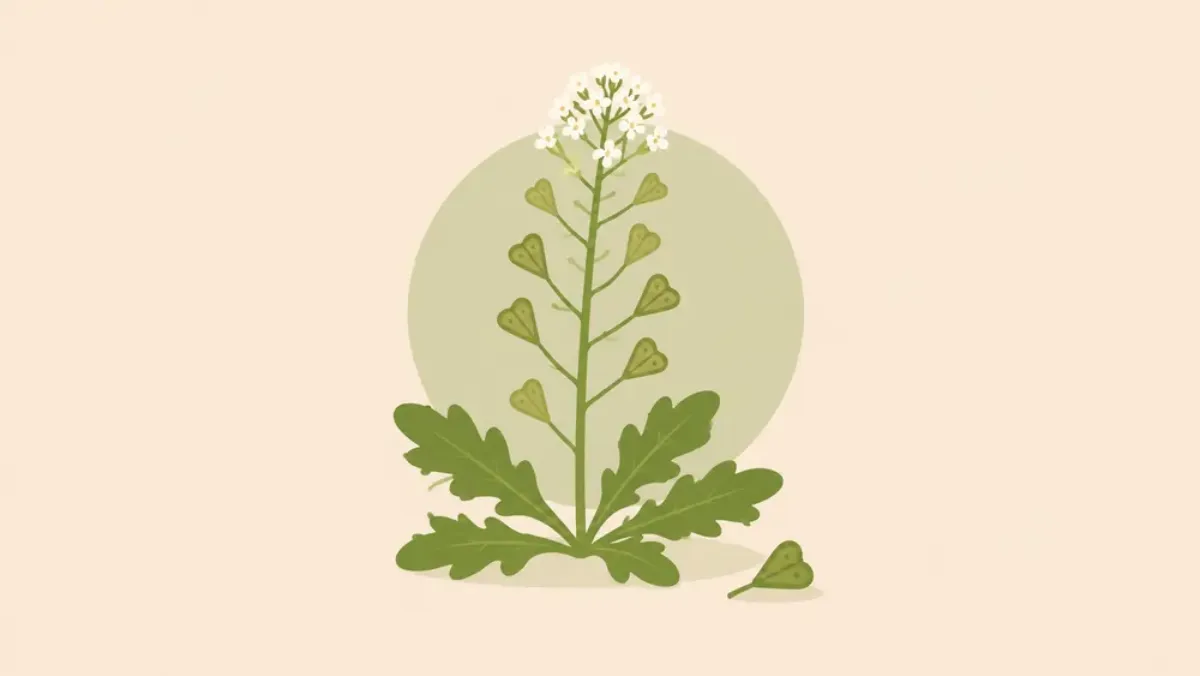
Shepherd’s purse identification becomes much easier once you know what to look for: tiny white four-petaled flowers, a basal rosette, slender upright stems, and the famous heart-shaped seed pods. The seed pods are the strongest visual clue. They look like small flat hearts, triangles, or old-fashioned purses hanging along the stem.
Shepherd’s purse is commonly known by its botanical name, Capsella bursa-pastoris. It belongs to the mustard family, also called Brassicaceae. Garden Organics treats this topic as a field-awareness and label-education guide: the goal is to recognize the plant’s features, understand common look-alikes, and avoid collecting wild plants without confident identification.
This article does not provide medical, foraging, or supplement-use advice. Do not eat, dry, tincture, or buy wild shepherd’s purse unless the plant identity is confirmed by reliable references or a qualified local expert. Dietary supplements are not intended to diagnose, treat, cure, or prevent any disease.
What Does Shepherd’s Purse Look Like?
Shepherd’s purse is a small, weedy plant with a ground-level rosette and one or more upright flowering stems. The plant often looks delicate rather than showy. Its flowers are small and white. Its seed pods are flat and heart-shaped to triangular.
The plant can grow in gardens, lawns, field edges, paths, roadsides, cultivated ground, disturbed soil, and open waste places. It is common in many regions and often appears where soil has been disturbed.
The easiest identification stage is when the plant has seed pods. Before seed pods appear, shepherd’s purse can look like many other small mustard-family weeds.
Shepherd’s Purse Identification: Quick Field Clues
| Feature | What to Look For | Why It Matters |
|---|---|---|
| Seed pods | Flat, heart-shaped to triangular pods | The strongest beginner ID clue |
| Flowers | Tiny white flowers with four petals | Shows mustard-family traits |
| Basal rosette | Leaves clustered near the ground | Common early growth feature |
| Flowering stem | Thin upright stem with small flowers and pods | Helps separate it from flat ground weeds |
| Habitat | Disturbed soil, gardens, roadsides, paths | Supports identification but does not prove it |
| Family clue | Four-petaled cross-like flowers | Typical mustard-family pattern |
Why the Heart-Shaped Seed Pods Are the Best Clue
The heart-shaped seed pods are the most useful shepherd’s purse identification feature. They are flat, small, and attached to the flowering stem by short stalks. Many people describe them as tiny hearts, triangles, purses, or pouches.
The common name “shepherd’s purse” comes from the resemblance between the pods and an old-fashioned purse or pouch. This feature is easier to recognize than the small flowers or early rosette leaves.
Look for pods along the stem below the newest flowers. The plant can keep producing new flowers at the top while older flowers lower on the stem mature into pods.
How to Identify the Flowers
Shepherd’s purse has very small white flowers. Each flower usually has four petals arranged in a cross-like shape, a classic mustard-family trait.
The flowers grow near the top of the stem in small clusters. They are not large or ornamental. A beginner may miss them unless looking closely.
The flowers alone are not enough for confident identification. Many mustard-family plants have small white flowers. Use flowers together with seed pods, rosette leaves, habitat, and overall growth pattern.
How to Identify the Basal Rosette
A basal rosette is a cluster of leaves growing close to the ground at the base of the plant. Shepherd’s purse often begins as a rosette before sending up flowering stems.
The rosette leaves can vary. They may be deeply lobed, toothed, or more narrow depending on age and growing conditions. This variation can confuse beginners.
Do not rely on rosette leaves alone. Many weeds form basal rosettes. Shepherd’s purse becomes much easier to confirm once flowers and heart-shaped pods appear.
How the Stem Helps With Identification
Shepherd’s purse usually sends up a slender, upright flowering stem from the basal rosette. The stem may be mostly unbranched or lightly branched. Small flowers appear near the top, while seed pods develop below.
The stem can look sparse. The plant does not usually have large dramatic leaves along the flowering stem. The strongest visual interest comes from the little pods.
When checking the stem, look for the sequence: basal rosette at the ground, upright stem, tiny white flowers near the top, and heart-shaped pods below the flowers.
Mustard-Family Traits That Help
Shepherd’s purse belongs to the mustard family. Mustard-family plants often have flowers with four petals arranged like a cross. They also often produce distinctive seed pods.
This family clue helps you place the plant in the right group, but it does not identify the exact species by itself. Many mustard-family weeds share similar flower structure.
Use the family pattern as a starting clue. Then confirm with the heart-shaped pods. The pods are what make shepherd’s purse stand out from many relatives.
Common Shepherd’s Purse Look-Alikes
Shepherd’s purse can be confused with other small mustard-family plants, especially before the seed pods mature. The most common confusion happens when people see small white flowers and assume the plant is shepherd’s purse.
| Look-Alike | How It Can Confuse You | Key Difference to Check |
|---|---|---|
| Field pennycress | Small white flowers and flat seed structures | Seed pods are more round or coin-like, not heart-shaped purses |
| Pepperweed | Small white flowers and weedy growth | Seed pods and leaf shape differ |
| Bittercress | Basal rosette and white flowers | Seed pods are long and narrow, not heart-shaped |
| Young mustard-family weeds | Similar rosette and flower pattern | Wait for seed pods before confirming |
| Other roadside weeds | Small size and disturbed-soil habitat | Check flower structure and pod shape together |
Field Pennycress vs Shepherd’s Purse
Field pennycress is one of the more useful comparisons because it also belongs to the mustard family and can have small white flowers. Its seed pods are usually more round, flat, and coin-like.
Shepherd’s purse has pods that look more heart-shaped to triangular, often with a small notch at the top. That pod shape is the practical field difference.
If the plant has round discs rather than tiny heart-shaped purses, do not call it shepherd’s purse. Check local field references before making any identification.
Bittercress vs Shepherd’s Purse
Bittercress can also confuse beginners because it has a small rosette and white mustard-family flowers. However, the seed pods are usually long, narrow, and upright rather than flat heart-shaped pods.
This difference becomes clear once the plant fruits. If the seed pods look like thin green rods, it is not typical shepherd’s purse.
Again, seed pods matter. Many small mustard-family flowers look similar until fruit develops.
Where Shepherd’s Purse Usually Grows
Shepherd’s purse often grows in disturbed soil. Look for it in gardens, fields, lawns, paths, sidewalks, waste places, roadsides, cultivated ground, and open areas.
Habitat can support identification, but it should not be the only clue. Many weeds thrive in disturbed soil. A plant in a garden path is not automatically shepherd’s purse.
Use habitat together with the rosette, flowers, seed pods, and overall growth pattern.
When Is Shepherd’s Purse Easiest to Identify?
Shepherd’s purse is easiest to identify after it has flowers and seed pods at the same time. At that stage, you can see the mustard-family flowers near the top and the heart-shaped seed pods below.
Young plants without pods are harder. They may look like other rosette-forming weeds. If you are unsure, wait until the plant produces seed pods before trying to confirm it.
Many identification mistakes happen when people rush the early stage. Patience improves accuracy.
Why You Should Not Forage From Uncertain Identification
Do not collect shepherd’s purse from the wild unless you can identify it confidently and know the safety of the location. Roadsides, sprayed lawns, contaminated soil, and polluted runoff areas are poor choices for plant collection.
Even if a plant is correctly identified, that does not mean it is appropriate for personal use. Plant safety depends on location, contamination, personal health factors, preparation, and intended use.
Garden Organics takes a conservative editorial stance here: field identification should not turn into casual self-use. A plant can be common and still require caution.
Shepherd’s Purse Identification Checklist
Use this checklist when you think you have found shepherd’s purse. The goal is to slow down the identification process and use multiple plant features together. Do not rely on one photo, one app result, or one clue.
Look for Heart-Shaped Seed Pods
Check for flat, heart-shaped to triangular pods along the stem. This is the strongest beginner clue.
Check the Tiny White Flowers
Look for small white flowers with four petals. The cross-like flower pattern suggests the mustard family.
Find the Basal Rosette
Look at the base of the plant for a rosette of leaves near the ground. Leaf shape may vary.
Study the Stem Pattern
Look for a slender upright stem with flowers near the top and older seed pods below.
Compare Look-Alikes
Check whether the plant might be field pennycress, bittercress, pepperweed, or another mustard-family weed.
Review the Growing Location
Notice whether it grows in disturbed soil, paths, gardens, fields, or roadsides. Avoid contaminated locations for any collection.
Do Not Use It Unless Certain
If you are not fully confident, do not eat, dry, tincture, or buy wild-collected material. Ask a qualified local expert.
What to Check on Dried Herb or Tincture Labels
If you are buying shepherd’s purse rather than identifying it in the field, check the label. Look for Capsella bursa-pastoris, aerial parts, herb, flowering herb, liquid extract, tincture, serving size, and warnings.
The botanical name helps confirm the plant identity. The plant part tells you what material is used. The format tells you how the product is prepared.
Do not buy a vague product that only says “shepherd herb” or uses unclear common-name wording. A clear label should reduce confusion, not create it.
Safety Notes Before Using Shepherd’s Purse
Shepherd’s purse is often discussed in herbal contexts, but that does not make it appropriate for everyone. Pregnant people should avoid self-directed use unless a qualified healthcare professional gives personalized guidance.
Breastfeeding people, people taking medication, and people with bleeding-related concerns or diagnosed health conditions should also ask a qualified professional before use.
Do not use shepherd’s purse to self-manage bleeding, menstrual concerns, postpartum concerns, blood pressure, urinary symptoms, or any diagnosed condition. Seek professional care for severe, unusual, persistent, or worsening symptoms.
Common Identification Mistakes to Avoid
Using Flowers Alone
Tiny white four-petaled flowers suggest the mustard family, but they do not prove shepherd’s purse.
Ignoring Seed Pod Shape
The heart-shaped to triangular seed pods are the key field clue. Check pods before deciding.
Confusing Field Pennycress
Field pennycress has more round, coin-like pods. Shepherd’s purse pods look more like little hearts or purses.
Trusting One App Result
Plant apps can help, but they can be wrong. Use field guides, local references, and expert confirmation when accuracy matters.
Collecting From Roadsides
Roadside plants may be exposed to pollution, spraying, or runoff. Identification alone does not make a plant safe to use.
FAQ about Shepherd’s Purse Identification
What is the easiest way to identify shepherd’s purse?
Look for flat heart-shaped to triangular seed pods along a slender stem with tiny white four-petaled flowers near the top.
What do shepherd’s purse seed pods look like?
They look like small flat hearts, triangles, or old-fashioned purses attached along the flowering stem.
What color are shepherd’s purse flowers?
The flowers are small and white, usually with four petals arranged in a cross-like pattern.
Does shepherd’s purse have a basal rosette?
Yes. It often starts as a basal rosette of leaves near the ground before sending up flowering stems.
Where does shepherd’s purse grow?
It often grows in disturbed soil, gardens, paths, lawns, roadsides, field edges, and cultivated ground.
What is the botanical name for shepherd’s purse?
The botanical name is Capsella bursa-pastoris.
What family is shepherd’s purse in?
Shepherd’s purse belongs to the mustard family, also called Brassicaceae.
What plants look like shepherd’s purse?
Look-alikes include field pennycress, bittercress, pepperweed, and other small mustard-family weeds.
Should beginners forage shepherd’s purse?
Beginners should not forage it without confident identification and local expert guidance. Do not use wild plants from uncertain ID.
Glossary
Shepherd’s Purse
A common name for Capsella bursa-pastoris, a small mustard-family plant known for heart-shaped seed pods.
Capsella bursa-pastoris
The botanical name for shepherd’s purse.
Seed Pod
The fruiting structure that holds seeds. In shepherd’s purse, the pods are flat and heart-shaped to triangular.
Basal Rosette
A cluster of leaves growing close to the ground at the base of a plant.
Mustard Family
A plant family also called Brassicaceae, often known for four-petaled flowers and distinctive seed pods.
Look-Alike
A plant that resembles another plant and may cause identification confusion.
Field Pennycress
A mustard-family plant that can resemble shepherd’s purse but usually has more round, coin-like seed pods.
Bittercress
A small mustard-family plant that may resemble shepherd’s purse early on but usually has long, narrow seed pods.
Disturbed Soil
Soil affected by digging, cultivation, foot traffic, construction, mowing, or other disruption.
Conclusion
Shepherd’s purse identification depends on several clues together: heart-shaped seed pods, tiny white four-petaled flowers, a basal rosette, and mustard-family traits. If you cannot confirm the plant confidently, do not collect or use it.
Sources
Shepherd’s purse weed profile with heart-shaped seedpods and similar-species notes, Cornell CALS Weed Science — cals.cornell.edu/weed-science/weed-profiles/shepherds-purse
Shepherd’s-purse identification, fruit shape, and mustard-family comparison, University of California IPM — ipm.ucanr.edu/PMG/WEEDS/shepherdspurse.html
Shepherd’s purse field weed identification with basal rosette, white flowers, and heart-shaped pods, Michigan State University Extension — canr.msu.edu/uploads/files/shepherdspurse.pdf
Capsella bursa-pastoris botanical profile and plant description, North Carolina Extension Gardener Plant Toolbox — plants.ces.ncsu.edu/plants/capsella-bursa-pastoris
Shepherd’s purse habitat and heart-shaped seed pod description, First Nature — first-nature.com/flowers/capsella-bursa-pastoris.php
Shepherd’s purse garden weed overview and heart-shaped pod note, Royal Horticultural Society — rhs.org.uk/weeds/shepherds-purse

Happy
0 %

Sad
0 %

Excited
0 %

Sleepy
0 %

Angry
0 %

Surprise
100 %
 0
0
 1
1